Update:
You can watch Alternative Freedom and download Alternative Freedom.
Popularity: 4% [?]
Visit the link below.
Free Software in Ethics and Society - Richard Stallman - Manchester 1st May.
Another excellent presentation by Richard Stallman. Download this one and share it with others.
Popularity: 2% [?]
I’ve been thinking about what other useful tools I can introduce to educators in secondlife. Builders Buddy is useful for people interested in building. I put together a small package with a tutorial, you can get a copy of builders buddy in sl. Watch the Builders Buddy video on youtube to see what it is. Probably one of the cool things I didn’t mention was wearing it as an attachment and using it to rez a few seats that would follow you around. Maybe I’ll make a part 2 video that also looks at the configuration options at the top of the main script. People used to proprietary products in sl would probably know of something like this that’s usually called a rez box.
Popularity: 10% [?]
I’ve been thinking about useful tools for educators in secondlife. Meta Presenter is a simple, really easy to use tool for giving presentations. Its free and open source. Watch my Meta Presenter demo video on Youtube.
Popularity: 10% [?]
I’ve been exploring virtual worlds again, if you havent looked at Croquet in a while, its time that you did, there’s a really nice video on the site that shows off some of its features. The only teacher I know working with Squeak in Australia is Bill Kerr. I think some of his kids may enjoy KAT(KidsFirst Application Toolkit), you can read more about that on the Croquet Collaborative page.
The other one I’ve been looking at is Secondlife, Ive looked at this on and off now for a while and also tried to use it as a platform for exploring my own online identity, relationships and learn about other cultures. Inevitably I also ended up learning how to develop all kinds of resources. One of the things that appeals to me about secondlife is that its built by its residents. I particularly enjoy building in a social environment where people see what your trying to do and come together to share ideas, collaborate, test, improve, offer help and criticism etc. Thats the nature of working in any open environment but its not like that everywhere in secondlife some places have restrictions, it depends where you are.
The place I liked going to the most was Waterhead welcome area, a lot of the time it was inhabited by some of the most creative and unique people I’ve met in secondlife, it was like a self organizing community of artists, many of whom possessed strong individuality, it changes all the time but unfortunately harsh restrictions were placed on this area too making it almost impossible to be productive and efficient though socially many interesting characters still frequent that place. I’ll try to write some more about my adventures in secondlife some other time.
I explored some of the “educational” area’s in secondlife, most of them weren’t very good, it was like someone dumped all this stuff there and expected you to basically click and read it all, about as interactive as a collection of static web pages. It seemed like these sims were either extremely bad or really well done and some of them seemed like they ran out of funds and just let it rot. The other problem I had was being ignored when trying to interact with educators in some of those sims, I think this was because I had no formal connection with those people.
One of the really well done sims is Jokaydia, it’s aesthetically pleasing, the people are friendly, theres a lot of useful resources and I’ve thoroughly enjoyed every event I’ve attended. Probably the best thing is the people I’ve met there and the connections I’ve made with them. Recently I spent some time getting to know Al Burton and helped him learn how to customize his avatar. I was just reading Kerry J’s blog and saw a video(the one below) showing Al Lupton wearing the white knight avatar(that I made) while flying around Jokaydia on a pegasus and then noticed an image by Jokay of Horse Shopping with Al. Another one of the really nice people Ive met at Jokaydia is Heyjude, check out her blog :) Thank you Jokaydians for including me in your adventures.
The bad news is that secondlife isn’t completely open source. Lindenlabs has always promised to release the code for both the client and the server but that hasn’t happened yet. They use a lot of open source software though. The following quotes are from Wikipedia entry for secondlife, visit that page to see the cited references and much more information.
*The flat, Earth-like world of Second Life is simulated on a large array of Debian servers, referred to as the Grid.
*Assets are stored in their own dedicated MySQL server farm
*Linden Lab pursues the use of open standards technologies, and uses free and open source software such as Apache, MySQL and Squid.
*The plan is to move everything to open standards by standardizing the Second Life protocol. Cory Ondrejka, former CTO of Second Life, has stated that a while after everything has been standardized, both the client and the server will be released as free and open source software.
OpenSimulator is an open source server for hosting virtual worlds similar to Second Life. OpenSimulator article on Wikipedia. I’ve been running Opensimulator in standalone mode for a couple of weeks, its quite good, you can use the secondlife client/viewer to connect to it and configure it to accept external connections so that your friends can logon. Some features aren’t working yet but the things that work well are building/terraforming. Theres a 3rd party application that allows you to backup your resources from secondlife and restore them on other grids and vice versa. Some things in secondlife are mostly made outside secondlife, like textures/sculpt maps so I can reuse these easily and also use opensim for testing/previewing, it costs money to upload textures/animations/sounds on secondlife and the thing that costs the most is land and theres a limit on how many prims you can use, on my opensim I can have as much land as I want and as many prims as possible. Prims are the basic building blocks of secondlife. I think this could be a nice setup for some people who develop resources for secondlife, its so much faster to develop on a local opensim and then restore on some other grid. I’ve heard that the most elite builders are programmers who write scripted builds and don’t even use the in-world tools to build, they run a script which rezzes/textures and aligns everything perfectly so it might be interesting to try and play around with that on opensim too.
You might want to see how some educators are using Croquet for Edusim.
I guess one of the most obvious questions is which is better, Croquet or Secondlife?
I prefer not to look at things in a linear way but I would say Croquet and copy/paste the unique aspects from the wikipedia article on Croquet.
Croquet, as a software development environment, is more extensible than the proprietary technologies behind collaborative worlds such as Second Life, and before that ViOS. This is because;
* It establishes a computational environment that belongs to its users;
* It is platform and device independent;
* Users/developers may freely share, modify and view the source code of the entire system (due to Croquet’s liberal license);
* The technology is not hosted on a single organization’s server (and hence not governed by any such organization);
* It provides a complete professional programmer’s language (Smalltalk/Squeak), IDE, and class library in every distributed, running participant’s copy (the programming development environment itself is simultaneously shareable and extensible); and
* Croquet based worlds can also be updated while the system is live and running.Some of the environments that are enabled by Croquet somewhat resemble those of Sun’s Project Wonderland. However, Croquet has been designed to go much further given that the programming of the 3D world is virtually without limits (due in part to Squeak’s late-binding architecture and metaprogramming facilities) as well as Croquet’s lack of dependency on server infrastructures as a means of supporting basic interactivity between peers.
Popularity: 4% [?]
Visit the Wikimania 2007 Wiki. Some of my friends are going, if your involved in Wikimedia Foundation projects you might be able to get sponsorship, be quick about applying.
Deadline: to allow the Scholarship Committee adequate time, applications must be received as soon as possible, but no later than April 1, 2007
Here’s a video from the Truth in Numbers: The Wikipedia Story. I like the design, check out the way they use media on their Wiki. Its hosted on www.wikia.com.
“Imagine a world where everyone had access to the sum of all human knowledge… that’s what we are doing with Wikipediaâ€
– Jimmy Wales
Popularity: 2% [?]
Eben Moglen with more words of wisdom.
â€Die Gedanken Sind Freiâ€: Free Software and the Struggle for Free Thought
Wizards of OS 3, Opening Keynote - Eben Moglen - June 10, 2004
Read the transcript and visit this page to download the video.
He talks about the history and struggle for the freedom of thought, economic justice and the equality of persons. The struggle against control of education and publication by the universal catholic church , control of printing and censorship of learning by state power, control of knowledge and culture by owners capitalistically motivated and idealogically inclined.
We can eradicate ignorance at the expense of a few, we have to do it. — Eben Moglen
Here’s a poem that was mentioned in the talk.
I think as I please
And this gives me pleasure.
My conscience decrees,
This right I must treasure.
My thoughts will not cater
To duke or dictator,
No man can deny—
Die gedanken sind frei.—German 16th-century peasant song
Die Gedanken Sind Frei.
Another quote:
The perpetuation of ignorance is the beginning of slavery — Eben Moglen “
Popularity: unranked [?]
It was a GNU Hurd developer that convinced me that its good to use FOSS on windows, some freedom is better none, even GNU Packages run on windows and most computer users run windows. So here’s a list of links. Some are equivalents to replace software on windows and some are the equivalent on GNU/Linux and some are cross platform so its stupid to call it the “Linux” equivalent. They also make the mistake of saying alternatives to commercial software. The opposite of FOSS is proprietary software.
- http://osswin.sourceforge.net/
- http://www.linuxrsp.ru/win-lin-soft/table-eng.html
- http://www.osalt.com/
- http://www.linux.ie/newusers/alternatives.php
- http://ubuntuguide.org/wiki/Alternatives
- http://linuxeq.com/
- http://www.grokdoc.net/index.php/Application_Crossover_Chart

My friend Archie Moore asked
“Can you recommend any Free (as in freedom) video editing software like premiere.”
I dont know premiere so if its obivous to anyone please leave a comment. All my videos are developed with free software so I think it would better to say “I want to do this, do you know any software that can do that?”
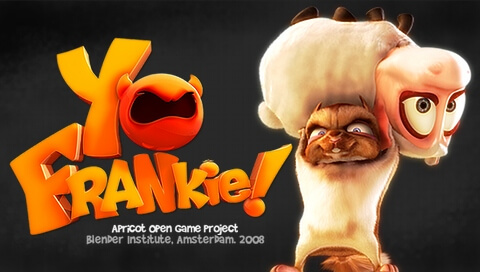
The main one I use is Avidemux, basically you can take a video, chop it all up, apply some filters, resize, crop etc, maybe add some audio and then put it all back together and save it in the format you want. I also use Blender for some things.
I use ffmpeg, ffmpeg2theora and mencoder for converting to different formats. On windows you can use mediacoder.
Probably the most powerful one is Cinelerra but it only runs on GNU/Linux.
The others I look at every now and again are DIva and Pitivi.
Last I heard Archie was in the UK or Europe so I hope he’s having a good time.
There’s also a review of his Depth of Field exhibition, thats the one I checked out.
Popularity: 5% [?]